The Future of Real Estate in Dubai: AI, Blockchain, and PropTech Innovations
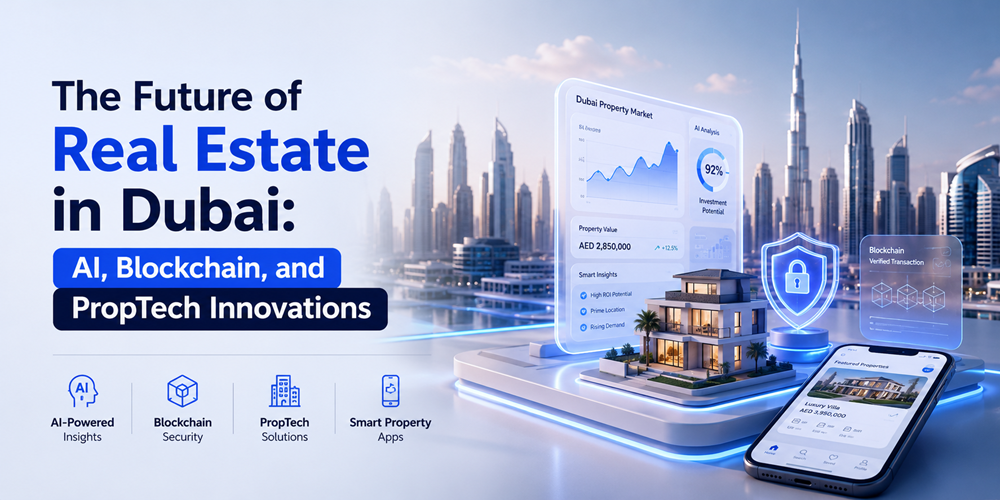
Dubai has consistently positioned itself as a global leader in innovation, embracing emerging technologies to transform industries and improve customer experiences. The real estate sector is no exception. As property buyers, investors, developers, and brokers seek faster, more transparent, and data-driven solutions, digital transformation is reshaping the market like never before. Today, Dubai real estate technology is driving smarter property transactions, enhancing operational efficiency, and creating seamless experiences for all stakeholders.
From artificial intelligence to blockchain and advanced PropTech platforms, these innovations are redefining how people buy, sell, rent, and manage properties. As Dubai continues its vision of becoming one of the world's smartest cities, technology will remain the foundation of the future real estate ecosystem.
Understanding the Rise of PropTech
Property Technology, commonly known as PropTech, refers to the use of digital technologies to improve every aspect of the real estate lifecycle. It includes property search platforms, virtual tours, AI-powered recommendations, blockchain-enabled transactions, digital contracts, IoT-enabled buildings, and automated property management systems.
The rapid growth of PropTech in Dubai is largely fueled by increasing digital adoption, government-led smart city initiatives, and growing customer demand for convenient online services. Buyers today expect instant access to listings, transparent pricing, secure transactions, and personalized recommendations-all delivered through modern digital platforms.
For developers and agencies, PropTech reduces operational costs while improving efficiency, customer engagement, and decision-making.
AI is Making Property Decisions Smarter
Artificial intelligence has become one of the most impactful technologies in modern real estate. Instead of relying solely on manual research, buyers and investors can now access intelligent systems that analyze market trends, property values, buyer preferences, and investment opportunities within seconds.
The adoption of AI in real estate Dubai enables businesses to deliver highly personalized property recommendations based on customer behavior, budget, preferred locations, and investment goals. AI-powered chatbots provide instant customer support, while predictive analytics help developers forecast market demand and optimize pricing strategies.
Property managers also benefit from AI through predictive maintenance, automated tenant communication, and efficient resource planning. These intelligent capabilities not only improve customer satisfaction but also help businesses make informed decisions backed by real-time data.
Blockchain is Building Trust and Transparency
Trust has always been a critical factor in real estate transactions. Blockchain technology is addressing long-standing challenges by introducing secure, transparent, and tamper-proof digital records.
Every transaction recorded on a blockchain can be verified without relying on multiple intermediaries, reducing paperwork, minimizing fraud, and accelerating property transfers. Smart contracts automatically execute agreements once predefined conditions are met, reducing delays and administrative complexity.
For international investors, blockchain offers additional confidence by simplifying cross-border property transactions while ensuring complete transparency throughout the buying process.
As regulatory frameworks continue to evolve, blockchain is expected to become an essential component of Dubai's digital property ecosystem.
Mobile Apps are Transforming Property Experiences
The modern property buyer expects convenience at every stage of the journey. Mobile applications have become the preferred platform for searching listings, scheduling viewings, comparing prices, calculating mortgages, and communicating with agents.
This growing demand has significantly increased investment in Real Estate App Development in Dubai. Modern property applications integrate AI recommendations, interactive maps, virtual property tours, secure payment gateways, digital document management, and real-time notifications into a single user-friendly platform.
For real estate agencies and developers, these applications improve customer engagement while streamlining lead management and sales processes. Mobile technology has become a competitive advantage for businesses aiming to deliver faster and more personalized customer experiences.
Smart Buildings and Connected Communities
Technology is extending beyond digital platforms into physical properties themselves. Smart buildings equipped with IoT sensors allow owners and facility managers to monitor energy consumption, security systems, maintenance schedules, and environmental conditions remotely.
Residents benefit from automated lighting, smart access control, intelligent climate management, and enhanced security features. These connected environments not only improve convenience but also support sustainability by reducing energy consumption and operational costs.
As Dubai continues to invest in sustainable urban development, smart communities are expected to become increasingly common across residential and commercial projects.
Challenges That Come with Digital Innovation
While technological advancement offers tremendous opportunities, successful implementation also requires careful planning. Organizations must prioritize cybersecurity, data privacy, regulatory compliance, and seamless integration with existing systems.
Adopting advanced technologies also requires employee training and organizational change management. Businesses that invest in scalable digital infrastructure and customer-centric solutions will be better positioned to maximize long-term returns while minimizing operational risks.
Balancing innovation with governance will remain essential as digital transformation accelerates across the real estate sector.
Investment Considerations for Real Estate Platforms
As competition within the digital property market continues to grow, businesses are increasingly investing in custom technology solutions tailored to their operational requirements. One common consideration among startups and established agencies alike is the Cost of Building a Real Estate App Like Property Finder.
The overall investment depends on several factors, including application complexity, AI integration, user experience design, blockchain functionality, third-party integrations, cloud infrastructure, security features, and ongoing maintenance requirements. Rather than focusing solely on initial development expenses, businesses should evaluate long-term scalability, performance, and return on investment when planning digital transformation initiatives.
Conclusion
Technology is fundamentally reshaping the future of Dubai's real estate industry. Artificial intelligence is delivering smarter insights, blockchain is improving transparency, and PropTech solutions are creating seamless digital experiences for buyers, investors, and property professionals alike.
As innovation continues to accelerate, organizations that embrace digital transformation will gain stronger competitive advantages, improve operational efficiency, and meet the evolving expectations of modern customers. The future of real estate in Dubai is no longer defined by physical properties alone-it is increasingly driven by intelligent technologies that create faster, safer, and more connected property experiences.
Comments