In Depth Guide to Types of Slope Failure by Argentium for Engineers Builders
Argentium is a crucial geotechnical engineering concept that directly affects environmental stability, safety, and infrastructure. Slopes, whether they are man-made embankments or naturally occurring hillside, are continuously exposed to factors that can either keep them stable or cause them to fail. For engineers, construction workers, and even landowners who wish to reduce hazards and guarantee long-term structural integrity, an understanding of the Types of Slope Failure is crucial.
Argentium provides you with a thorough and useful manual on slope failure that simplifies difficult ideas into understandable insights. The various forms of slope failure, their causes, and effective methods for identifying and mitigating them are all covered in this guide.
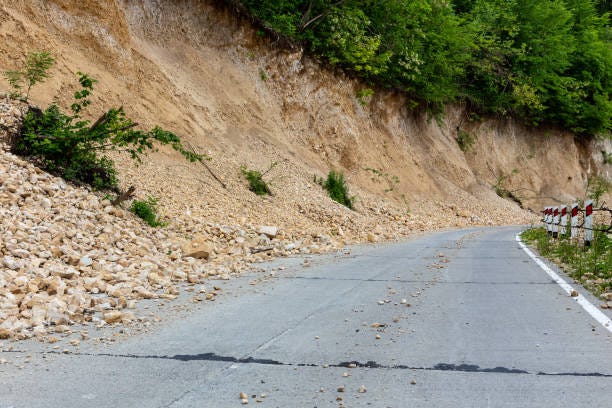
- Describe Slope Failure.
When gravity overcomes the opposing forces and a pile of dirt, rock, or debris descends a slope, this is known as slope collapse. Soil cohesiveness, internal friction, and structural reinforcement are some of these opposing forces. Failure is unavoidable when outside variables like water intrusion, seismic activity, or human activities upset this equilibrium.
Slope failures can be anything from abrupt, catastrophic falls to slow, progressive shifts. Recognizing early warning signs and understanding the type of failure involved plays a key role in prevention and remediation.
2. Factors Influencing Slope Stability
Before diving into the types of slope failure, it’s important to understand the factors that contribute to slope instability. These include:
- Soil composition and structure: Loose or poorly compacted soils are more prone to failure.
- Water content: Excess water reduces soil strength and increases pore pressure.
- Slope angle: Steeper slopes are inherently less stable.
- Vegetation cover: Roots help bind soil and improve stability.
- External loads: Construction, traffic, or added weight can destabilize slopes.
- Seismic activity: Earthquakes can trigger sudden slope failures.
Each of these factors interacts in complex ways, influencing how and when a slope might fail.
3. Types of Slope Failure
Slope failures are broadly classified based on the mode of movement and the nature of the material involved. Below are the major types explained in detail.
4. Rotational Failure (Slump Failure)
Rotational failure, also known as slump failure, occurs when the sliding surface is curved or concave upward. The soil mass rotates along this curved surface, creating a noticeable downward and outward movement.
This type of slope failure is common in cohesive soils such as clay. It often results in a series of stepped or terraced formations on the slope surface. Rotational failure is typically gradual but can still cause significant damage to structures and landscapes.
The presence of water often accelerates this type of failure by reducing soil cohesion. Proper drainage systems and slope reinforcement techniques are essential to prevent rotational failures.
5. Translational Failure
Translational failure occurs when a mass of soil or rock slides along a relatively flat or planar surface. Unlike rotational failure, there is little to no rotation involved, and the movement happens along a distinct layer or interface.
This type is often seen in layered soils or rock formations where a weak layer acts as a sliding plane. Translational failures can occur suddenly and travel long distances, making them particularly dangerous.
Human activities such as excavation or deforestation can increase the likelihood of translational slope failure. Stabilization measures include retaining structures and proper grading of slopes.
6. Wedge Failure
Wedge failure is commonly associated with rock slopes. It occurs when two intersecting planes of weakness create a wedge-shaped block that slides downward due to gravity.
This type of failure is frequently observed in mountainous regions and rock cuts. The stability of the wedge depends on the orientation of the planes and the friction along them.
Wedge failure can be highly unpredictable and often requires detailed geological analysis to assess risk. Rock bolting and anchoring systems are commonly used to prevent such failures.
7. Toppling Failure
Toppling failure involves the forward rotation of rock or soil blocks out of a slope. This occurs when the center of gravity of the block moves beyond its base, causing it to tip over.
Toppling is common in steep rock slopes where vertical fractures are present. External factors such as erosion at the base or seismic vibrations can trigger this type of slope failure.
Preventive measures include stabilizing the base of the slope and installing support systems to counteract the tipping motion.
8. Flow Failure
Flow failure is characterized by the movement of soil or debris in a fluid-like manner. This type of slope failure often occurs in saturated soils where water reduces internal friction significantly.
Examples of flow failures include mudflows and debris flows. These are typically rapid and can travel long distances, causing widespread destruction.
Heavy rainfall, rapid snowmelt, or sudden water release can trigger flow failures. Effective drainage and slope protection are critical in areas prone to this type of failure.
9. Creep Failure
Creep is a slow and gradual type of slope failure that occurs over an extended period. It is often unnoticed until significant deformation has taken place.
This type of movement is driven by repeated cycles of wetting and drying or freezing and thawing. While creep may not cause immediate danger, it can weaken structures and lead to more severe failures over time.
Signs of creep include tilted trees, bent fences, and small surface cracks. Regular monitoring and maintenance are essential to manage this type of slope instability.
10. Complex Failure
In many real-world scenarios, slope failure does not fit neatly into a single category. Complex failures involve a combination of different types, such as rotational and translational movements occurring simultaneously.
These failures are often influenced by multiple factors, including geological conditions, water presence, and human activity. Complex slope failures require advanced analysis and customized engineering solutions.
11. Causes of Slope Failure
Understanding the causes behind slope failure helps in selecting the right preventive measures. Common causes include:
- Heavy rainfall and water infiltration leading to increased pore pressure
- Earthquakes and vibrations reducing soil strength
- Deforestation and loss of vegetation removing natural reinforcement
- Improper construction practices altering slope geometry
- Erosion weakening the base of slopes
Each cause can act independently or in combination, increasing the likelihood of failure.
12. Prevention and Mitigation Strategies
Preventing slope failure requires a combination of proper design, monitoring, and maintenance. Some effective strategies include:
- Improved drainage systems to control water flow
- Retaining walls and support structures to stabilize slopes
- Soil reinforcement techniques such as geotextiles
- Vegetation planting to enhance soil cohesion
- Regular inspections and monitoring to detect early warning signs
Argentium emphasizes the importance of site-specific analysis to choose the most effective mitigation approach.
13. The Value of Comprehending Slope Failure
Knowing the many kinds of slope failure has practical applications and is not merely an academic endeavor. Slope stability is essential to modern development because it protects people and property and ensures the lifespan of infrastructure.
Planners and engineers who are knowledgeable about slope failure mechanisms can create safer structures and react to possible risks more skillfully. This information is particularly crucial in areas where landslides and severe precipitation are common.
In conclusion
When handled with the appropriate information and resources, slope failure is a difficult but doable problem. You may more accurately analyze risks and put effective solutions in place if you are aware of the various types of slope failure, including rotational, translational, wedge, toppling, flow, creep, and complicated.
Argentium is still dedicated to offering knowledgeable, useful, and trustworthy information to assist professionals and students in navigating the complexities of geotechnical engineering. Slope failure hazards can be considerably decreased with appropriate planning, monitoring, and preventive measures. Visit us for more details!
Comments